
Last November, we met a team of eight Aalto University software students and a blank canvas at our Helsinki office. Six months later, after eight sprints and a considerable amount of iteration, that canvas looks very different. The project has now reached its conclusion: a near production-ready application and a team that learned how to build one.
In this final part of the Code Forward series, we look at what was actually achieved, and what both sides took away from the collaboration. If you’re new to the series, you can start with Part 1 and Part 2.
Introducing the Aalto AI Student Assistant
What started as an open-ended idea has taken shape as a concrete solution. The result is a student-focused application designed to support everyday academic life – the Aalto AI Student Assistant (working title: “Aalto All Day and Night”).
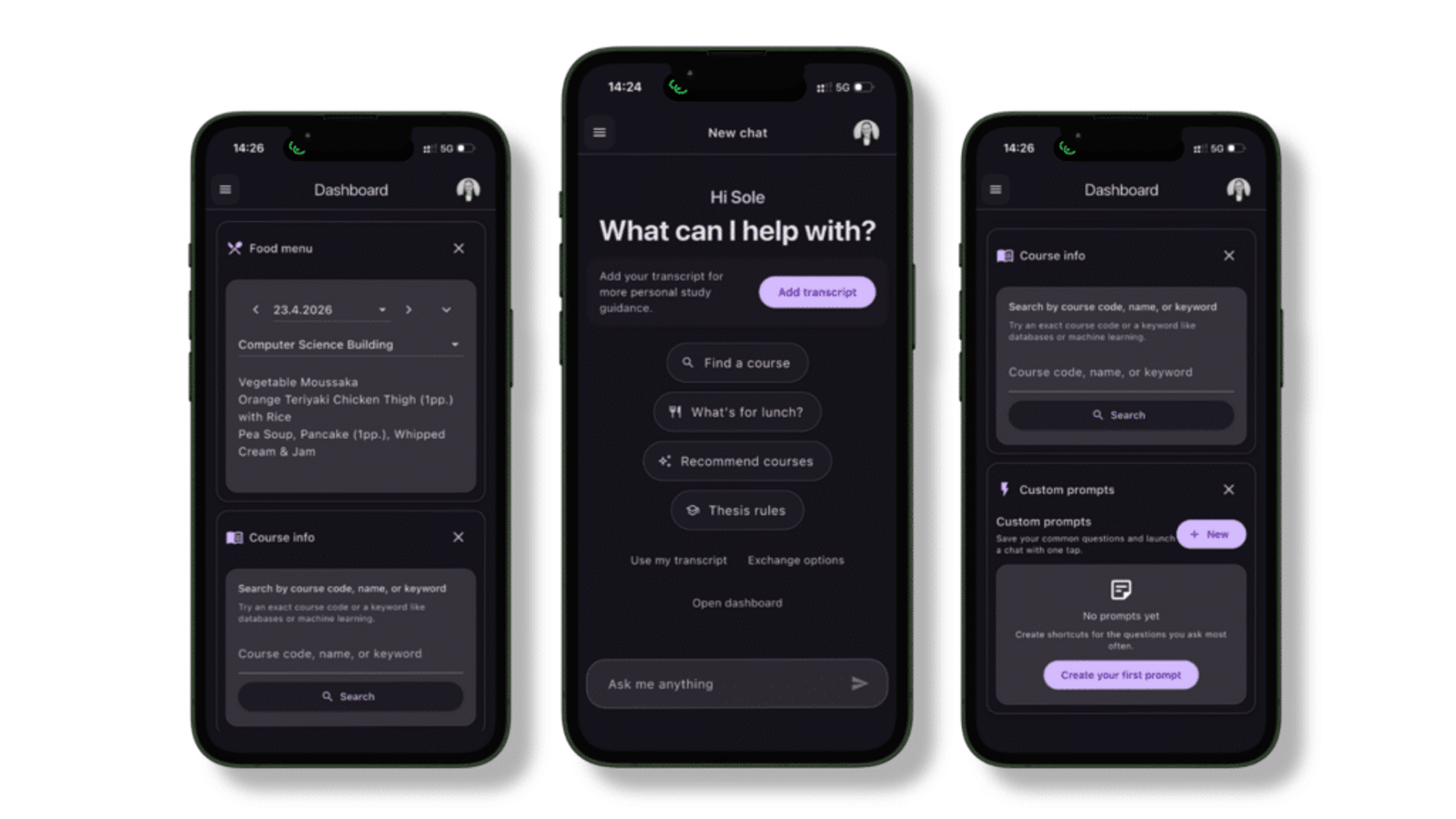
At its core, the app acts as a personal assistant for students. It helps users navigate their studies by analyzing academic transcripts and suggesting relevant courses. Around that, the team built a broader set of features aimed at making student life more manageable. The solution includes:
- Academic transcript analysis and personalized course recommendations
- Study-related guidance, such as thesis support and course information
- Practical everyday features like lunch menus and reminders
- A fully designed user experience and interface
- An admin side with tools for managing content, configurations, and privacy-related aspects
Built on top of Codemate’s Paimen AI, the application uses Flutter, Google Cloud, Firebase, and Gemini AI to extend the platform into a concrete, user-facing product.
Importantly, this wasn’t just a technical prototype. The team built something that behaves like a real product – taking into account usability, data handling, and how the solution would function in practice. The application hasn’t been published yet, but it is close. The final phase of the project focused less on adding new features and more on improving stability, documentation, and overall readiness – exactly what you would expect when moving toward production.
“The biggest difference (to a typical course project) was that this never felt like a fixed assignment. It was a dynamic project that kept evolving, where a lot of the work was about managing complexity and stability rather than just adding features,” Niklas Iivari, one of the Aalto students, reflects.
What was learned?
From the students’ perspective
The learning went well beyond technology.
The team learned what it means to take ownership of a solution. From defining the problem to delivering something that holds together as a whole. They worked through real constraints, made decisions with consequences, and saw how those decisions played out over time.
They also learned to operate without constant guidance. In many cases, the answer wasn’t given – it had to be figured out. At the same time, the team was honest about what didn’t work. Some planned features were left out. Certain technical aspects caused friction. Testing and platform-specific issues surfaced late. Instead of smoothing over these gaps, they addressed them directly in their own evaluation.
That openness was reflected in how the team approached usability as well.
“During a peer testing session, it was surprising to see how much of what we thought was obvious wasn’t intuitive to new users. It really highlighted how hard it is to build something that’s genuinely user-friendly,” says Ruslan Potekhin, who acted as Scrum Master.
Beyond technical learning, the project also shaped how the team sees their future work.
“Working on this product helped clarify what I want to focus on professionally. I realised I’m most motivated by the creative side of building new things,” Niklas reflects.
From Codemate’s perspective
For us, the value was different, but equally important.
The project offered insight into how emerging developers approach modern development: working with ambiguity, adopting AI tools, and thinking beyond individual tasks.
It also went beyond observation. During the project, the team developed ideas and features that are likely to find their way into Codemate’s own solutions – particularly within Paimen. Seeing how new developers interpret and extend the platform highlighted both opportunities and assumptions that are easy to overlook when working with the same tools every day.
“We’ve learned a lot from this collaboration,” says Ville Lindfors, Director of AI, Data & Cloud at Codemate. “And I’m genuinely impressed by what the team has achieved in a relatively short time. The quality of the work and how they approached the problem exceeded expectations.”
For the mentoring team, the process itself was just as valuable.
“It’s been a pleasure to see how the team has grown during the project,” adds Sole Piirainen, who acted as a mentor. “They’ve taken on more responsibility step by step and really developed their way of working together.”
Coaching without hand-holding
A deliberate choice throughout the project was to take a coaching role rather than a directive one. Instead of providing ready-made answers, the team was pushed to think through their own decisions. Questions were met with more questions. Early solutions weren’t immediately corrected. The aim was not to make the process easier, but to make it meaningful.
This approach is slower at the start. It requires patience – from both sides. But it leads to a different outcome: a team that understands why decisions are made, not just how to implement them.
“In real product work, there’s rarely a clear right answer. The goal was to help the team get comfortable making decisions without having everything defined for them,” Ville explains his approach to coaching.
What this collaboration shows
This project set out to explore what happens when students are given real responsibility. And we think that the result is clear. Given the right context, support, and expectations, a student team can build something that closely resembles a real product. At the same time, the collaboration model itself proved its value.
The outcome wasn’t just an application. It was a team that understands what it takes to build one and a collaboration that gave something back to both sides.
We’d like to thank Ruslan, Dexton, Eemil, Eetu, Janne, Niklas, Peppi and Robi, as well as Aalto University, for making this project possible. And thank you to everyone who has followed along across all three parts of the series.
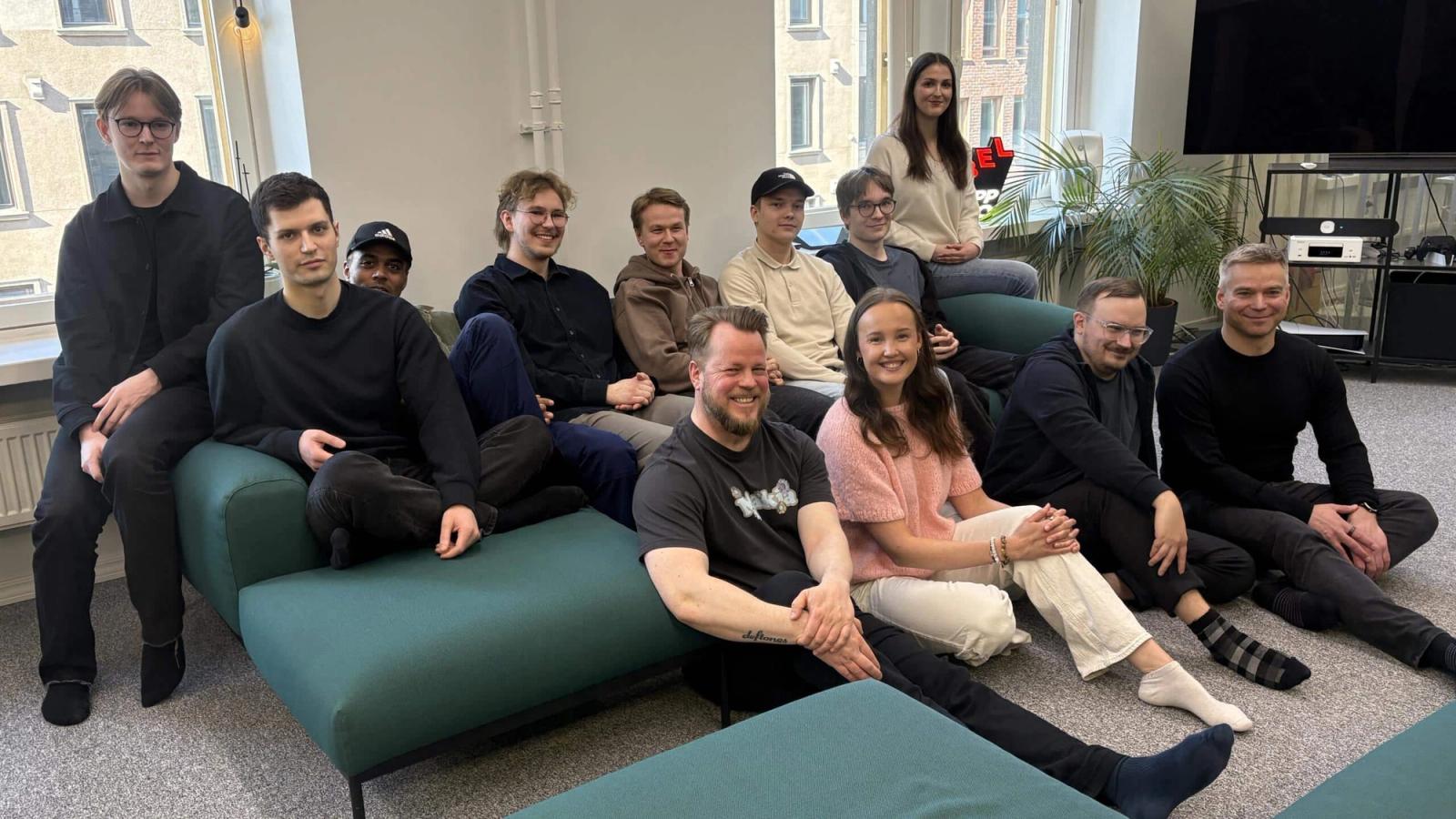
Code Forward was a collaboration between Codemate and a team of Aalto University students, running from late 2025 through spring 2026. Read Part 1 and Part 2 for the full story.
Note: this article was published when Paimen was still known as Rebel AI Studio. Read about the name change.
